
Choose 101-500 most accurate study material
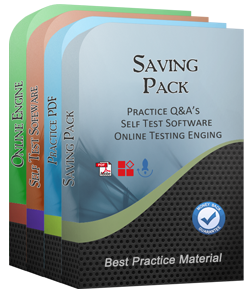
Pass your actual test with our Lpi 101-500 training material at first attempt
Last Updated: Aug 22, 2026
No. of Questions: 299 Questions & Answers with Testing Engine
Download Limit: Unlimited
Pass your 101-500 actual test with our valid 101-500 training material
We provide the most up to date and accurate 101-500 questions and answers which are the best for clearing the actual test. Instantly download of the Lpi 101-500 exam practice torrent is available for all of you. 100% pass is our guarantee of 101-500 valid questions.
100% Money Back Guarantee
Exam4Docs has an unprecedented 99.6% first time pass rate among our customers.  We're so confident of our products that we provide no hassle product exchange.
- Best exam practice material
- Three formats are optional
- 10 years of excellence
- 365 Days Free Updates
- Learn anywhere, anytime
- 100% Safe shopping experience
- Instant Download: Our system will send you the products you purchase in mailbox in a minute after payment. (If not received within 12 hours, please contact us. Note: don't forget to check your spam.)
Lpi 101-500 Practice Q&A's

- Printable 101-500 PDF Format
- Prepared by 101-500 Experts
- Instant Access to Download
- Study Anywhere, Anytime
- 365 Days Free Updates
- Free 101-500 PDF Demo Available
- Download Q&A's Demo
Lpi 101-500 Online Engine

- Online Tool, Convenient, easy to study.
- Instant Online Access
- Supports All Web Browsers
- Practice Online Anytime
- Test History and Performance Review
- Supports Windows / Mac / Android / iOS, etc.
- Try Online Engine Demo
Lpi 101-500 Self Test Engine

- Installable Software Application
- Simulates Real Exam Environment
- Builds 101-500 Exam Confidence
- Supports MS Operating System
- Two Modes For Practice
- Practice Offline Anytime
- Software Screenshots
Positive outcome
With passing rate up to 98-100 percent, our Lpi study guide has help our customers realized their dreams as much as possible. If you master the certificate of the LPIC-1 Exam 101, Part 1 of 2, version 5.0 test engine in the future, you will not run with the crowd anymore. In contrary you can stand out in your work and impressed others with professional background certified by exam. Self-fulfillment will not in oral anymore. Getting sense of satisfaction is the realistic achievement ahead of you, and you can stand a better chance of getting better working condition. If you haven't passed the LPIC-1 Exam 101, Part 1 of 2, version 5.0 prep training, you can get full refund without any reasons or switch other versions freely.
Confused by numerous practice materials flooded into the market, customers from all different countries feel the same way. How to identify the most helpful one from them? It is difficult to make up their minds of the perfect one practice material. We understand it is an exhausting process, which weigh their down mentally and physically. Especially of those expensive materials that cost a fortune while help you a little. The worst thing is they are exactly stumbling block on your way to success. However, our LPIC-1 Exam 101, Part 1 of 2, version 5.0 accurate questions with the best reputation in the market instead can help you ward off all unnecessary and useless materials and spend all limited time on practicing most helpful questions as much as possible. To get to know more about their features of LPIC Level1 LPIC-1 Exam 101, Part 1 of 2, version 5.0 practice torrent, follow us as passages mentioned below.
Exam Criteria Breakdown
Students must display an understanding of the following topics during the 101-500 test and should be able to prove competence in them by completing several activities in each critical area. The list of the subject to master for the exam is as follows:
- Linux Filesystems, Devices, and Hierarchy Standard for Filesystems
Creating filesystems and partitions, maintaining their integrity, and controlling mounting and unmounting are the tested competencies for this domain. The candidate must know how to manage file ownership and permissions correctly, work with symbolic and hard links, including their creation and changing, and quickly find and move system files to their correct location.
- System Architecture
This domain focuses on the skills one should have to determine and configure the fundamental elements of specific system hardware, perform system booting, change boot targets and runlevels, and more. Additional knowledge includes the management of SysVinit runlevel and system, among other topics.
- Unix and GNU commands
The core testable component in this section is the command line with additional knowledge of using filters for processing text streams, handling basic file management, and utilizing redirects, pipes, and streams being crucial. Skills in basic process management, modifying process execution priorities, utilizing regular expressions in order to search text files, and basic file editing will also be assessed.
- Package Management and Linux Installation
This section concerns designing hard disk layout, installing boot managers, and administering shared libraries. Performing package management using specific Debian tools, YUM, Zypper, and RPM are also the topics candidates must demonstrate knowledge of. Additionally, the exam will test students on their competency with the Linux guest system and the impact cloud computing and virtualization have on it.
Effective review process
To candidates saddled with burden to exam, our LPIC-1 Exam 101, Part 1 of 2, version 5.0 pdf vce is serving as requisite preparation for you. Our 101-500 valid pdf can stand the test of time and have been first-rank materials for ten years with tens of thousands of regular clients all over the world. Why? You may wonder. Actually, it is the effective preparation you may have after obtaining them, and you do not need to spend day and night anxiously for this LPIC Level1 latest torrent like others. With the effective LPIC-1 Exam 101, Part 1 of 2, version 5.0 practice pdf like us you can strike a balance between life and study, and you can reap immediate harvest by using our LPIC-1 Exam 101, Part 1 of 2, version 5.0 updated vce.
Topics of LPIC-1 Linux Administrator , 101-500 Exam
To know course content so that aspirants can prepare for exam is a must. LPIC-1, 101-500 exam will include following topics :
1. System Architecture
Change between runlevels / boot targets including single user mode.
Differentiate between the various types of mass storage devices.
Conceptual understanding of sysfs, udev and dbus.
Understanding of SysVinit and systemd.
Tools and utilities to manipulate USB devices.
Awareness of Upstart.
Set the default runlevel or boot target.
Boot the system
Alert users before switching runlevels / boot targets or other major system events.
Determine and configure hardware settings
Shutdown and reboot from the command line.
Enable and disable integrated peripherals.
Awareness of acpid.
Determine hardware resources for devices.
Provide common commands to the boot loader and options to the kernel at boot time.
Tools and utilities to list various hardware information (e.g. lsusb, lspci, etc.).
Change runlevels / boot targets and shutdown or reboot system
Properly terminate processes.
Demonstrate knowledge of the boot sequence from BIOS/UEFI to boot completion.
Check boot events in the log files.
2. Linux Installation and Package Management
Ensure the /boot partition conforms to the hardware architecture requirements for booting.
Obtain package information like version, content, dependencies, package integrity and installation status (whether or not the package is installed).
Use Debian package management
Load shared libraries.
Understand common elements virtual machines in an IaaS cloud, such as computing instances, block storage and networking.
Install, re-install, upgrade and remove packages using RPM, YUM and Zypper.
Awareness of dnf.
Obtain information on RPM packages such as version, status, dependencies, integrity and signatures.
Identify shared libraries.
Awareness of cloud-init.
Understand Linux extensions which integrate Linux with a virtualization product.
Use RPM and YUM package management
Providing alternative boot locations and backup boot options.
Understand the general concept of virtual machines and containers.
Determine what files a package provides, as well as find which package a specific file comes from.
Identify the typical locations of system libraries.
Awareness of apt.
Install a boot manager
Install, upgrade and uninstall Debian binary packages.
Linux as a virtualization guest
Install and configure a boot loader such as GRUB Legacy.
Perform basic configuration changes for GRUB 2.
Interact with the boot loader.
Design hard disk layout
Manage shared libraries
Tailor the design to the intended use of the system.
Find packages containing specific files or libraries which may or may not be installed.
Understand how system images are used to deploy virtual machines, cloud instances and containers.
Understand unique properties of a Linux system which have to changed when a system is cloned or used as a template.
Allocate filesystems and swap space to separate partitions or disks.
Knowledge of basic features of LVM.
3. GNU and Unix Commands
Create simple regular expressions containing several notational elements.
Perform basic file management
Understand the concepts of special characters, character classes, quantifiers and anchors.
Process text streams using filters
Send output to both stdout and a file.
Use the output of one command as arguments to another command.
Search text files using regular expressions
Basic file editing
Using find to locate and act on files based on type, size, or time.
Understand the differences between basic and extended regular expressions.
Change the priority of a running process.
Copy multiple files and directories recursively.
Run jobs in the foreground and background.
Remove files and directories recursively.
Modify process execution priorities
Redirecting standard input, standard output and standard error.
Create, monitor and kill processes
Send signals to processes.
Awareness of Emacs, nano and vim.
Use regular expressions to delete, change and substitute text.
Use simple and advanced wildcard specifications in commands.
Understand and use vi modes.
Copy, move and remove files and directories individually.
Run a program with higher or lower priority than the default.
Know the default priority of a job that is created.
Pipe the output of one command to the input of another command.
Use regular expression tools to perform searches through a filesystem or file content.
Work on the command line
Use and modify the shell environment including defining, referencing and exporting environment variables.
Select and sort processes for display.
Signal a program to continue running after logout.
Invoke commands inside and outside the defined path.
Navigate a document using vi.
Insert, edit, delete, copy and find text in vi.
Use and edit command history.
Monitor active processes.
Use streams, pipes and redirects
Use single shell commands and one line command sequences to perform basic tasks on the command line.
Send text files and output streams through text utility filters to modify the output using standard UNIX commands found in the GNU textutils package.
Configure the standard editor.
Usage of tar, cpio and dd.
4. Devices, Linux Filesystems, Filesystem Hierarchy Standard
Find files and commands on a Linux system.
Use of labels and UUIDs for identifying and mounting file systems.
Configure filesystem mounting on bootup.
Understand the correct locations of files under the FHS.
Maintain the integrity of filesystems
Copying versus linking files.
XFS
Configure user mountable removable filesystems.
Know the location and purpose of important file and directories as defined in the FHS.
Use links to support system administration tasks
Control mounting and unmounting of filesystems
ext2/ext3/ext4
Know how to change the file creation mask.
Use various mkfs commands to create various filesystems such as:
Use the group field to grant file access to group members.
Repair simple filesystem problems.
Basic feature knowledge of Btrfs, including multi-device filesystems, compression and subvolumes.
Manage MBR and GPT partition tables
Awareness of systemd mount units.
Create partitions and filesystems
exFAT
Create and change hard and symbolic links
Manage access permissions on regular and special files as well as directories.
Identify hard and/or soft links.
Verify the integrity of filesystems.
Monitor free space and inodes.
Use access modes such as suid, sgid and the sticky bit to maintain security.
Create links.
Find system files and place files in the correct location
VFAT
Manage file permissions and ownership
Manually mount and unmount filesystems.
Lpi 101-500 (LPIC-1 Exam 101, Part 1 of 2, version 5.0) Certification Exam is a globally recognized certification exam that validates the candidate's knowledge and skills related to Linux system administration. LPIC-1 Exam 101, Part 1 of 2, version 5.0 certification exam is suitable for IT professionals who want to establish their credibility and professionalism in the IT industry. 101-500 exam is designed to test the candidate's ability to perform real-world tasks related to Linux system administration. LPIC-1 Exam 101, Part 1 of 2, version 5.0 certification is the first of two exams required to obtain the LPIC-1 certification, which is widely recognized in the IT industry.
Reference: https://www.lpi.org/our-certifications/lpic-1-overview
Responsible company
We think of writing the most perfect LPIC-1 Exam 101, Part 1 of 2, version 5.0 torrent vce and most considerate aftersales services as our unshakable responsibility. We are so dedicated not for fishing for compliments but most important, for relieves you of worries about exam. As a responsible company with great reputation among the market, we trained our staff and employees with strict beliefs to help you with any problems about our 101-500 practice questions, who are staunch defender to your interests. What is more, we have optimized the staff and employees to choose the outstanding one to offer help. It is a win-win situation for you and our company to pass the LPIC-1 Exam 101, Part 1 of 2, version 5.0 practice exam successful. So we never stop the pace of offering the best services and 101-500 free questions. That is exactly the aims of our company in these years.
Lpi 101-500 certification exam, also known as the LPIC-1 Exam 101, Part 1 of 2, version 5.0, is an entry-level certification for professionals who want to demonstrate their skills in Linux administration. 101-500 exam is designed to test the fundamental knowledge and skills required to install, configure, and manage Linux systems. It is essential for those who want to pursue a career in Linux administration or IT professionals who want to expand their skillset.
Lpi 101-500 Exam Syllabus Topics:
| Section | Objectives |
|---|---|
| Devices, Linux Filesystems, Filesystem Hierarchy Standard | - Control mounting and unmounting of filesystems - Manage file permissions and ownership - Maintain the integrity of filesystems - Manage disk quotas - Find system files and place files in the correct location - Create partitions and filesystems - Create and change hard and symbolic links |
| Linux Installation and Package Management | - Install a boot manager - Design hard disk layout - Use Debian package management - Linux as a virtualization guest - Manage shared libraries - Use RPM and YUM package management |
| GNU and Unix Commands | - Process text streams using filters - Basic file editing - Modify process execution priorities - Perform basic file management - Use streams, pipes and redirects - Search text files using regular expressions - Create, monitor and kill processes - Work on the command line |
| System Architecture | - Determine and configure hardware settings - Boot the system - Change runlevels / boot targets and shutdown or reboot system |
Over 70123+ Satisfied Customers
 Ingrid
Lillian
Murray
Roberta
Valentina
Algernon
Exam4Docs is the world's largest certification preparation company with 99.6% Pass Rate History from 70123+ Satisfied Customers in 148 Countries.

Related Blogs
- GET Real Lpi 101-500 Exam Questions With 100% Refund Guarantee Nov 16, 2025 [Q300-Q316]
- 101-500 Exam Practice Questions prepared by Lpi Professionals [Q28-Q47]
- [Q115-Q131] Full 101-500 Practice Test and 246 unique questions with explanations waiting just for you!
- Updated Oct-2021 Official licence for 101-500 Certified by 101-500 Dumps PDF [Q20-Q38]
Our Clients












Our study guide torrent covers most questions of real test and can help you pass exam certainly. The high pass rate bring help you pass at the first attempt.
Contact Us
From Monday to Saturday
Support: Contact now
If you have any question please leave me your email address, we will reply and send email to you in 12 hours.
Copyright © 2026 EXAM4DOCS.COM. All rights reserved. All trademarks are the property of their respective owners and we don't provide actual questions from any vendor. Privacy Policy