
Choose NetSec-Architect most accurate study material
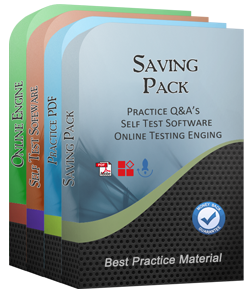
Pass your actual test with our Palo Alto Networks NetSec-Architect training material at first attempt
Updated: Sep 06, 2026
No. of Questions: 67 Questions & Answers with Testing Engine
Download Limit: Unlimited
Pass your NetSec-Architect actual test with our valid NetSec-Architect training material
We provide the most up to date and accurate NetSec-Architect questions and answers which are the best for clearing the actual test. Instantly download of the Palo Alto Networks NetSec-Architect exam practice torrent is available for all of you. 100% pass is our guarantee of NetSec-Architect valid questions.
100% Money Back Guarantee
Exam4Docs has an unprecedented 99.6% first time pass rate among our customers.  We're so confident of our products that we provide no hassle product exchange.
- Best exam practice material
- Three formats are optional
- 10 years of excellence
- 365 Days Free Updates
- Learn anywhere, anytime
- 100% Safe shopping experience
- Instant Download: Our system will send you the products you purchase in mailbox in a minute after payment. (If not received within 12 hours, please contact us. Note: don't forget to check your spam.)
NetSec-Architect Online Engine

- Online Tool, Convenient, easy to study.
- Instant Online Access
- Supports All Web Browsers
- Practice Online Anytime
- Test History and Performance Review
- Supports Windows / Mac / Android / iOS, etc.
- Try Online Engine Demo
NetSec-Architect Self Test Engine

- Installable Software Application
- Simulates Real Exam Environment
- Builds NetSec-Architect Exam Confidence
- Supports MS Operating System
- Two Modes For Practice
- Practice Offline Anytime
- Software Screenshots
NetSec-Architect Practice Q&A's

- Printable NetSec-Architect PDF Format
- Prepared by NetSec-Architect Experts
- Instant Access to Download
- Study Anywhere, Anytime
- 365 Days Free Updates
- Free NetSec-Architect PDF Demo Available
- Download Q&A's Demo
Palo Alto Networks NetSec-Architect Exam Overview:
| Certification Vendor: | Palo Alto Networks |
|---|---|
| Exam Name: | Palo Alto Networks Network Security Architect (NetSec-Architect) Certification Exam |
| Exam Number: | NetSec-Architect |
| Related Certifications: | Palo Alto Networks Certified Network Security Engineer (PCNSE) |
| Exam Format: | Multiple choice, Scenario-based questions |
| Available Languages: | English |
| Recommended Training: | Security Architecture Learning Resources Palo Alto Networks Training Courses |
| Exam Registration: | Pearson VUE Registration Palo Alto Networks Certification Portal |
| Sample Questions: | Palo Alto Networks NetSec-Architect Sample Questions |
| Exam Way: | Online proctored or onsite testing via Pearson VUE |
| Pre Condition: | Recommended: Strong experience with enterprise network security and Palo Alto Networks solutions; PCNSE-level knowledge is typically expected. |
| Official Syllabus URL: | https://www.paloaltonetworks.com/services/education/certification |
Palo Alto Networks NetSec-Architect Exam Syllabus Topics:
| Section | Objectives |
|---|---|
| SASE and Secure Access Design | - Remote access security architecture - Prisma Access architecture - SD-WAN integration and design considerations |
| Palo Alto Networks Platform Architecture | - Panorama centralized management design - Next-Generation Firewall (NGFW) architecture and capabilities - Logging, monitoring, and visibility architecture |
| Threat Prevention and Security Services | - Threat prevention design (IPS, anti-malware, URL filtering) - Application identification and policy enforcement - Decryption and SSL inspection architecture |
| Automation and Integration | - Integration with SIEM and SOAR platforms - API-based automation and orchestration - Infrastructure as Code security integration |
| Network Security Architecture Principles | - Security architecture frameworks and design principles - Risk assessment and security requirements mapping - Zero Trust architecture concepts |
| Cloud Security Architecture | - Container and workload protection architecture - Prisma Cloud security architecture concepts - Cloud network security design (AWS, Azure, GCP) |
Palo Alto Networks Network Security Architect Sample Questions:
Question 1
A global organization is in the process of securing critical applications during a cloud-based migration while migrating to a cloud-first design, and it is currently performing a brownfield migration of its most critical applications - such as CRM and product intellectual property / design systems - into Azure Cloud. The organization already has an active/passive high availability (HA) NGFW deployed at its data center with multiple zones and has replicated that design into its existing Azure HA deployment.
The organization recognizes the need to modernize its security posture as critical workloads move out of the data center and users connect from anywhere. Its security model is defined by a traditional "hard shell, soft center" approach:
Zero Trust Gaps
- Current network segmentation is perimeter-based. The organization wants to expand Zero Trust principles across cloud and on-premises environments.
- The network relies heavily on VLANs and IP address-based Access Control Lists (ACLs) segmented primarily by office location and broad departmental groups.
- Once employees are on the corporate network (i.e., inside the "perimeter"), they have relatively wide access.
- If attackers compromise a single endpoint (e.g., via a phishing email), they can easily move laterally and scan for high-value targets.
Cloud Blind Spots
- The organization uses Azure for its production environments and hosts applications that contain sensitive customer data.
- Security controls in the cloud are often managed independently of the on-premises network.
Access is frequently granted with overly permissive identity and access management (IAM) roles and keys based on the resource rather than the user's real-time context or application health.
Remote User Access
- Many remote users are still hairpinning into the corporate data center just to reach internet or SaaS resources, creating latency and inefficiency.
- Traditional VPN is used for remote employees.
- The VPN grants access to the entire internal network segment making the remote endpoint the new, weaker perimeter. There is no continuous check on the user's device health after the initial connection.
Visibility and Logging
- Logs are primarily stored on-premises, then forwarded to a local Security Information and Event Management (SIEM) solution. As applications move to Azure, visibility into cloud traffic and user behavior becomes fragmented.
Data Security Concern
- Sensitive data, including product design files, will now live in SaaS and cloud environments. The organization needs data security to prevent leakage and enforce compliance.
Ingress Security
- Third-party partners and suppliers require access into the data center and cloud applications, introducing risk at ingress points.
The organization needs to ensure data security and prevent the leakage of sensitive product design files since it is migrating to SaaS and cloud environments.
How would implementing a Next-Generation CASB (CASB-X) capability address the concerns in the scenario?
A. By continuously monitoring user behavior and device health from a central control point to prevent lateral movement if an attacker compromises an endpoint
B. By applying URL filtering and malware prevention to all traffic destined for unsanctioned or risky cloud applications, reducing the attack surface
C. By replacing the reliance on VLANs and IP address-based Access Control Lists (ACLs) by enforcing a user-to-application microsegmentation policy based on identity
D. By providing data loss prevention (DLP) features to scan data-at-rest and data-in-transit in sanctioned SaaS and cloud applications
Question 2
A global organization has fully adopted Prisma Access to provide security for its mobile workforce and remote offices, and user identity is managed in Okta. The security team wants to create consistent Security policies that grant access to specific SaaS applications based on a users' departments, regardless of whether they work from home or a from branch office connected via an SD-WAN device. Which architecture ensures that consistent user-to-group mapping is available to Prisma Access for policy enforcement in this use case?
A. Install the Palo Alto Networks User-ID agent and configure it to sync user information from Okta to Prisma Access
B. Configure each remote office SD-WAN device and each user's GlobalProtect client to query Okta directly for user information
C. Configure SAML federation between Prisma Access and Okta to provide user identity for every web request
D. Deploy Panorama to manage Prisma Access and configure it to pull user and group information from Okta via the Cloud Identity Engine
Question 3
An architect is reviewing a use case with the following requirements:
- Visibility on the health of an end user's path for the five most
critical applications
- Metrics on the impact of endpoint health for application
- Centralized call quality analytics from Zoom video conferencing
solution
- Insights into the supporting protocols, such as DNS
- Support 600 users on Windows desktops in a single sales office
Which solution should be recommended to meet these requirements?
A. GlobalProtect with a Prisma Access portal configured and ADEM enabled
B. Prisma Browser or the Prisma Browser extension with RUM metrics
C. Prisma SD-WAN using the native application dashboard and link quality monitoring
D. Remote networks with ADEM enabled and an ION device
Question 4
An organization plans to deploy a full SASE architecture consisting of Prisma SD-WAN IONs at branches and data centers alongside Prisma Access remote networks, service connections, and mobile users. The business office team requires that traffic from global remote offices to public cloud is of highest criticality, and this traffic should have the greatest service-level agreement (SLA) and QoS priority while still maintaining a balance of threat inspection. Which recommendation should the architect make to provide the lowest latency, highest throughput, and greatest resilience for the applications?
A. Prisma SD-WAN IONs deployed within the cloud environment using BGP-to-peer to the internal route tables of the application
B. Prisma Access remote networks with service connections directly to the cloud environment using IPSec and either static or dynamic routing
C. Prisma Access Agent or a PAC file explicit proxy configuration connecting the end user devices directly to Prisma Access with a service connection to the public cloud provider
D. Prisma SD-WAN ION deployed at both branch and private data center with a direct private link between the private data center and the public cloud provider
Question 5
An organization with offices throughout the world has an SD-WAN solution in which all traffic is backhauled to a central set of data centers. Many of the offices have IoT / OT devices. Which IoT Security requirement must be taken into consideration by the security architect when determining which Zero Trust network solution will help this organization evolve its security architecture?
A. Either a Prisma SD-WAN ION or an NGFW device must be present for accurate IoT / OT detection.
B. All DHCP requests must traverse the Prisma SD-WAN fabric for IoT / OT detection.
C. The organization must have local NGFW for enforcement.
D. A local sensor must be deployed as either an agent on the DHCP server or as a container on the virtual infrastructure.
Solutions:
| Question 1 Answer: D | Question 2 Answer: D | Question 3 Answer: D | Question 4 Answer: A | Question 5 Answer: A |
Hi all, I passed NetSec-Architect exam with 92%, 100% valid Exam4Docs real exam questions.
 By Morgan
I passed the NetSec-Architect exam on the first try!!! Exam4Docs was very helpful,especially on the NetSec-Architect QAs' coverage in the real test
By Rachel
I passed my NetSec-Architect exam with a high score.
I think you have the greates dumps.
By Tiffany
I prepared my NetSec-Architect exam with your great practice questions, and when I took the test, I found all real questions are in your NetSec-Architect guides.
By Zachary
I've just passed the NetSec-Architect exam yesterday.
By Breenda
It was helpful in helping
me secure a high rank in the NetSec-Architect exam.
By Edwina
Disclaimer Policy: The site does not guarantee the content of the comments. Because of the different time and the changes in the scope of the exam, it can produce different effect. Before you purchase the dump, please carefully read the product introduction from the page. In addition, please be advised the site will not be responsible for the content of the comments and contradictions between users.

Exam4Docs helps you do exactly that with our high quality training materials to pass the actual test. NetSec-Architect practice torrent focused on the exam objective that you need to know before appearing in the exam. The Palo Alto Networks NetSec-Architect can help you pass your certification exam at first attempt!
Besides, we have the money back guarantee on the condition of failure. You just need to show us the failure score report and we will refund you after confirming.
Frequently Asked Questions
What kinds of study material Exam4Docs provides?
Test Engine: NetSec-Architect study test engine can be downloaded and run on your own devices. Practice the test on the interactive & simulated environment.
PDF (duplicate of the test engine): the contents are the same as the test engine, support printing.
How long can I get the NetSec-Architect products after purchase?
You will receive an email attached with the NetSec-Architect study material within 5-10 minutes, and then you can instantly download it for study. If you do not get the study material after purchase, please contact us with email immediately.
How often do you release your NetSec-Architect products updates?
All the products are updated frequently but not on a fixed date. Our professional team pays a great attention to the exam updates and they always upgrade the content accordingly.
Can I get the updated NetSec-Architect study material and how to get?
Yes, you will enjoy one year free update after purchase. If there is any update, our system will automatically send the updated study material to your payment email.
Do you have any discounts?
We offer some discounts to our customers. There is no limit to some special discount. You can check regularly of our site to get the coupons.
What's the applicable operating system of the NetSec-Architect test engine?
Online Test Engine can supports Windows / Mac / Android / iOS, etc., because it is the software based on WEB browser. You can use it on any electronic device and practice with self-paced.
Online Test Engine supports offline practice, while the precondition is that you should run it with the internet at the first time.
Self Test Engine is suitable for windows operating system, running on the Java environment, and can install on multiple computers.
PDF Version: can be read under the Adobe reader, or many other free readers, including OpenOffice, Foxit Reader and Google Docs.
How does your Testing Engine works?
Once download and installed on your PC, you can practice NetSec-Architect test questions, review your questions & answers using two different options 'practice exam' and 'virtual exam'.
Virtual Exam - test yourself with exam questions with a time limit.
Practice Exam - review exam questions one by one, see correct answers.
Do you have money back policy? How can I get refund if fail?
Yes. We have the money back guarantee in case of failure by our products. The process of money back is very simple: you just need to show us your failure score report within 60 days from the date of purchase of the exam. We will then verify the authenticity of documents submitted and arrange the refund after receiving the email and confirmation process. The money will be back to your payment account within 7 days.
Over 70123+ Satisfied Customers
Our Clients












Our study guide torrent covers most questions of real test and can help you pass exam certainly. The high pass rate bring help you pass at the first attempt.
Contact Us
From Monday to Saturday
Support: Contact now
If you have any question please leave me your email address, we will reply and send email to you in 12 hours.
Copyright © 2026 EXAM4DOCS.COM. All rights reserved. All trademarks are the property of their respective owners and we don't provide actual questions from any vendor. Privacy Policy